- What Is a Sinus Lift?
- When Is a Sinus Lift Required for Dental Implants?
- Can Same-Day Dental Implants Be Placed After a Sinus Lift?
- Dental Implant Cost and Sinus Lift Considerations
- Are There Structural Alternatives to a Sinus Lift?
- What Is the Sinus Lift Procedure Like?
- Why Regular Preventive Care Matters
- Final Thoughts: Do You Really Need a Sinus Lift?
If you are currently exploring tooth replacement options, you already know that permanent implants are the gold standard for restoring missing teeth. However, if you are missing teeth in your upper jaw and your dentist mentions that you require a sinus lift first, it is entirely natural to feel unsure. Many patients wonder whether this structural procedure is truly necessary, if it will significantly delay their overall treatment timeline, or if it will add unnecessary costs.
Let’s walk through what a sinus lift procedure actually involves, when it is clinically required, and how it directly affects your path to a secure, permanent dental implant journey—simply and clearly.
What Is a Sinus Lift?
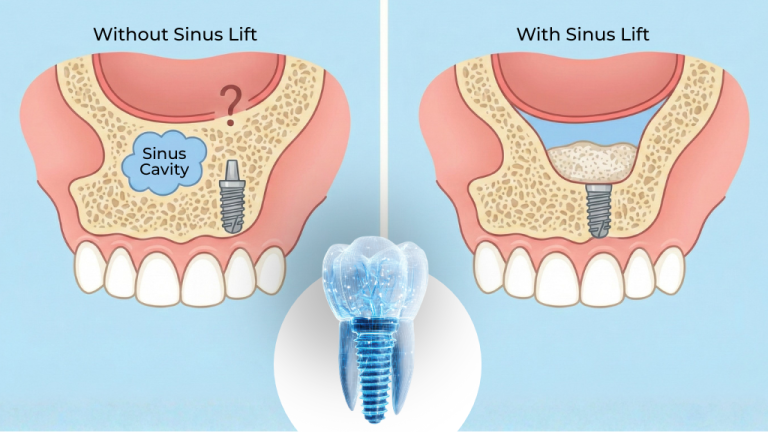
A sinus lift, also recognized in clinical dentistry as sinus augmentation, is a specialized surgical procedure that adds bone volume to your upper jaw bone (the maxilla) in the specific premolar and molar regions near your nasal sinus cavities.
The roots of your natural upper teeth sit directly beneath your maxillary sinuses. When you lose an upper tooth, the jawbone that once wrapped tightly around that root starts to shrink back and reabsorb into the body naturally. This biological process can leave the bone wall separating your mouth from your sinuses incredibly thin.
A sinus lift safely lifts the lower sinus membrane upward, creating an empty pocket where specialized bone graft material can be safely inserted. This additional bone creates a thick, strong, and highly stable foundation for your future replacement teeth. Without adequate bone height and density, an implant post cannot integrate or stay locked into place properly, directly threatening the long-term success of the restoration.
When Is a Sinus Lift Required for Dental Implants?
Not every single dental patient who needs upper jaw replacements will require a sinus lift. The specific anatomical need for sinus augmentation depends heavily on several distinct diagnostic factors, including:
-
Bone Height and Density: The absolute thickness of the remaining maxillary jaw bone.
-
The Specific Location of the Missing Tooth: Teeth located closer to the back molars naturally have less bone padding underneath the sinus floor.
-
Duration of Tooth Loss: How long the natural tooth has been missing. The longer a space is left empty, the more bone structure is permanently lost.
-
Overall Oral and Sinus Anatomy: Individual variations in the size and shape of your natural sinus cavities.
Your dental team will carefully evaluate these variables using advanced, high-resolution 3D Cone Beam CT imaging to accurately map your structural anatomy and determine if a periodontal sinus augmentation treatment is necessary to protect your upcoming investment.
Can Same-Day Dental Implants Be Placed After a Sinus Lift?
Same-day dental implants are a brilliant, highly convenient option when a patient already possesses optimal bone mass. However, when a structural sinus lift is mandatory, the freshly placed bone graft material needs adequate time to heal, solidify, and fuse seamlessly with your natural jawbone.
This recovery and integration process typically spans anywhere from 4 to 9 months, depending entirely on your body’s unique healing rate and the type of bone graft material selected. While waiting for a few months can sometimes feel frustrating, this foundational step is vital for building a long-lasting, rock-solid base that ensures your permanent dental implants never shift or fail under the daily pressures of chewing.
Dental Implant Cost and Sinus Lift Considerations
The total cost of permanently replacing a tooth can vary widely based on individual biological needs. On average, a single standard dental implant can range anywhere between $3,000 and $5,000, with separate costs added if preparatory procedures like a sinus lift or ridge augmentation are required.
While preparing the jawbone does require a financial investment upfront, dental implants consistently offer much better lifetime value compared to traditional alternatives like removable dentures or dental bridges. Because they prevent facial structural collapse and won’t decay, implants safeguard your remaining teeth and eliminate the frequent replacement costs associated with older dental prosthetics. Most modern dental practices offer flexible financing plans to help make your surgical care completely stress-free.
Are There Structural Alternatives to a Sinus Lift?
In select cases, an experienced clinician might be able to help you avoid a sinus lift completely. Depending on your specific bone dimensions, alternative options could include:
-
Shorter Dental Implants: Utilizing wider but shorter implant posts designed to safely anchor in shallower bone.
-
Angled Implant Placement: Tilting the implant posts strategically during surgery to tap into stronger, denser bone regions away from the sinus floor.
-
Advanced Mini-Implants: Alternative anchoring techniques that work around severe bone loss.
A thorough structural assessment at an advanced oral surgery center is the safest way to find out if your anatomy qualifies for these alternative methods.
What Is the Sinus Lift Procedure Like?
A sinus lift is a routine outpatient procedure typically performed right in the office under local anesthesia or comfortable dental sedation. During the treatment, a tiny incision is made in the gum tissue to access the underlying jawbone. The thin, flexible sinus membrane is gently pushed upward, and the bone grafting material is carefully packed into the newly created space beneath it.
Most patients report experiencing very minimal discomfort during the procedure itself. Swelling and mild tenderness are common for a few days afterward, but can be easily managed with over-the-counter or prescribed medication. Following your specific post-operative care instructions carefully ensures a completely smooth, predictable healing phase.
Why Regular Preventive Care Matters
Maintaining pristine oral health through regular hygiene appointments plays a massive role in preserving your natural jawbone structure. Leaving issues like advanced gum disease untreated accelerates bone loss around your tooth roots, making invasive surgeries much more likely later down the road. Committing to a consistent schedule of routine preventive dental care and cleanings keeps your gums healthy and minimizes the need for advanced structural grafting down the line.
Final Thoughts: Do You Really Need a Sinus Lift?
A sinus lift is never a random recommendation—it is a critical, highly protective foundation built to save your dental implants from failing. The single best way to discover the exact path to restoring your smile is through a comprehensive, personalized dental consultation. With modern 3D imaging and advanced surgical techniques, your journey toward a healthy, radiant smile is safer and more predictable than ever before.