
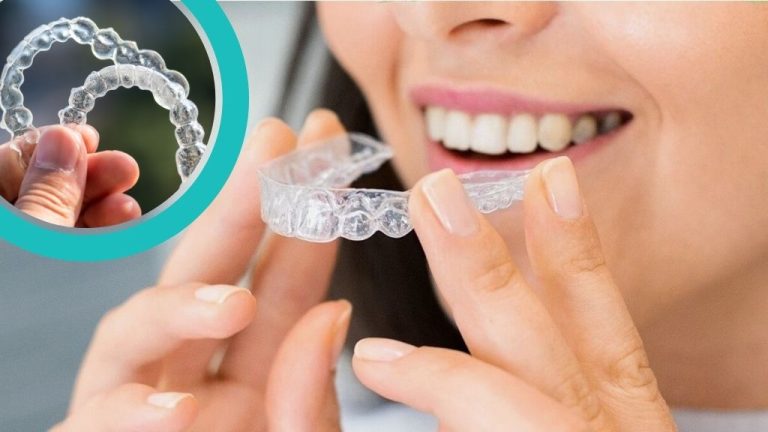
When people think of Invisalign, they often focus on the aesthetic benefits—straighter teeth, a more confident smile, and an invisible alternative to traditional braces. However, Invisalign offers more than just cosmetic improvements; it also provides significant oral health benefits.
From better dental hygiene to reducing the risk of serious dental conditions, Invisalign can contribute to a healthier mouth.
In this article, we will explore the many ways Invisalign aligners improve oral health and answer common questions such as “Is Invisalign good for teeth?” and “How does Invisalign improve dental hygiene?”
1. Enhanced Dental Hygiene with Removable Aligners
One of the most significant Invisalign oral health benefits is the ability to maintain excellent oral hygiene. Unlike traditional braces, which have brackets and wires that trap food and bacteria, Invisalign aligners are removable. This allows users to brush and floss normally, reducing the risk of plaque buildup, cavities, and gum disease.
With traditional braces, food particles can get stuck between wires and teeth, making it difficult to clean properly. Invisalign eliminates this issue, leading to better long-term dental hygiene.
2. Reduced Risk of Gum Disease and Cavities
Straight teeth are easier to clean, which means they are less prone to gum disease and cavities. Crooked or crowded teeth create tight spaces where food and bacteria accumulate, leading to plaque buildup. Over time, this increases the risk of gingivitis and periodontal disease.
Since Invisalign gradually moves teeth into proper alignment, it eliminates these hard-to-reach areas and makes brushing and flossing more effective. This helps in preventing gum inflammation, bleeding, and other oral health issues.
3. Protection Against Excessive Wear and Tear
Malocclusion (misaligned teeth) can cause uneven wear on the teeth, leading to enamel erosion, fractures, and increased sensitivity. By correcting alignment issues, Invisalign helps distribute bite pressure evenly, reducing strain on individual teeth and preventing long-term damage.
For people with bite problems such as overbite, underbite, or crossbite, Invisalign can help reduce excessive wear, which would otherwise require future restorative dental procedures such as crowns or veneers.
4. Invisalign vs. Braces for Oral Health: A Healthier Alternative
A common question among patients is “Invisalign vs. braces for oral health: which is better?” Both orthodontic treatments have their benefits, but when it comes to oral hygiene, Invisalign has a clear advantage.
Traditional braces require meticulous cleaning around brackets and wires, which can be challenging and time-consuming. Neglecting proper cleaning can lead to demineralization, staining, and cavities. In contrast, Invisalign allows patients to maintain their normal brushing and flossing routine, reducing the risk of decay and gum disease.
Additionally, Invisalign aligners exert gentle force on teeth, leading to less discomfort and fewer oral sores compared to metal braces. This makes it a more comfortable and healthier orthodontic solution.
5. Prevention of Jaw Pain and TMJ Disorders
Misaligned teeth can lead to an improper bite, causing stress on the jaw joints and muscles. This can result in temporomandibular joint (TMJ) disorders, which cause jaw pain, headaches, and difficulty chewing.
Invisalign helps correct these alignment issues, ensuring that the upper and lower teeth fit together properly. This reduces strain on the jaw muscles and can alleviate or prevent TMJ-related pain and discomfort.
6. Better Digestion and Nutritional Benefits
Chewing is the first step in the digestion process, and misaligned teeth can interfere with proper chewing. When food isn’t broken down effectively in the mouth, the digestive system has to work harder, potentially leading to gastrointestinal issues.
By aligning the teeth correctly, Invisalign ensures that food is chewed thoroughly, promoting better digestion and nutrient absorption. This is an often-overlooked health advantage of Invisalign aligners that contributes to overall well-being.
7. Reduced Risk of Tooth Fractures and Chipping
Protruding or improperly aligned teeth are more susceptible to fractures and chipping, especially for individuals who grind their teeth at night. Invisalign helps to reposition the teeth into a more secure and balanced alignment, reducing the likelihood of dental trauma.
For individuals who suffer from bruxism (teeth grinding), Invisalign can also act as a protective barrier, preventing excessive wear and minimizing the risk of cracks and fractures.
8. Improved Confidence and Mental Well-Being
Although mental well-being isn’t a direct oral health benefit, there is a strong connection between self-confidence and dental health. Many people with misaligned teeth feel self-conscious about their smiles, leading to low self-esteem and social anxiety.
With Invisalign, patients can achieve a straighter, healthier smile without the embarrassment of visible braces. This boost in confidence often leads to better social interactions and a greater commitment to oral hygiene.
Conclusion
So, is Invisalign good for teeth? Absolutely! The health advantages of Invisalign aligners go beyond aesthetics. From promoting better oral hygiene to reducing the risk of gum disease, cavities, and TMJ disorders, Invisalign is a powerful tool for maintaining long-term dental health.
When considering Invisalign vs. braces for oral health, it’s clear that Invisalign offers unique benefits that make it a preferred choice for many patients. With its removable design, comfortable fit, and ability to improve overall well-being, Invisalign is more than just a cosmetic solution—it’s an investment in lifelong oral health.
Instagram – @cheerdental_
Facebook – @Cheerdental