
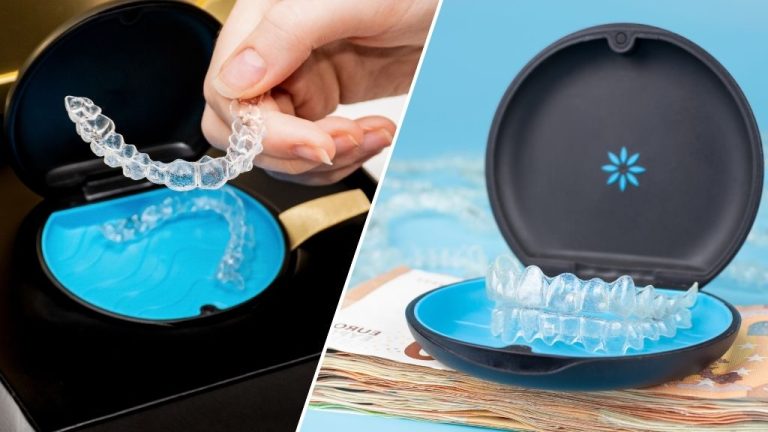
For decades, traditional braces were the go-to solution for straightening teeth. However, advancements in dental technology have introduced a more convenient and discreet alternative—Invisalign. These clear aligners use cutting-edge science to gradually shift teeth into alignment. But how exactly does Invisalign work? Let’s explore the science behind Invisalign and understand how clear aligners move your teeth.
How Invisalign Works: The Fundamentals
Invisalign is an orthodontic treatment that utilizes a series of custom-made, transparent aligners to gently reposition teeth over time. Unlike traditional braces, which rely on metal brackets and wires, Invisalign applies controlled force to specific teeth, guiding them into their ideal positions. Each set of aligners is worn for about two weeks before being replaced with the next in the series, progressively adjusting your smile.
The Invisalign treatment process begins with a consultation, during which a dentist or orthodontist assesses the patient’s teeth. Advanced 3D imaging technology, such as the iTero scanner, is used to create a digital model of the teeth and simulate the projected results. Based on this model, a customized treatment plan is developed, and a series of aligners is manufactured to achieve the desired outcome.
The Science Behind Invisalign and Teeth Movement
The principle behind teeth straightening with clear aligners is biological. Teeth are not fixed in place; they are supported by the periodontal ligament, a soft tissue structure that allows them to shift gradually under controlled pressure. Invisalign aligners exert consistent force on targeted areas, prompting the periodontal ligament to respond by breaking down bone in the direction of movement and rebuilding it behind the shifting tooth.
This process, known as bone remodeling, is a natural biological response to orthodontic forces. When pressure is applied, cells called osteoclasts break down the existing bone structure, while osteoblasts create new bone tissue to stabilize the teeth in their new positions. Over time, this continuous process leads to properly aligned teeth and a well-balanced bite.
How Clear Aligners Move Teeth: Step by Step
The clear aligners teeth movement process follows a structured approach:
- Initial Pressure Application
- When a new aligner is worn, it applies gentle force on specific teeth, encouraging movement.
- Bone Resorption and Deposition
The applied pressure signals the periodontal ligament to break down and regenerate bone tissue in the direction of movement.
Gradual Shift
Over the course of 1-2 weeks, the teeth move slightly in response to the aligner’s force. - Replacement with a New Aligner
- Once the teeth have shifted to match the shape of the aligner, the next set is introduced to continue the process.
Final Retention Phase
Once treatment is complete, a retainer is used to maintain the results and prevent teeth from shifting back.
Invisalign vs. Traditional Braces: A Scientific Comparison
While both Invisalign and traditional braces aim to achieve the same goal—straightening teeth—the mechanisms they use are quite different: - Braces utilize brackets, wires, and bands to create tension, gradually pulling teeth into alignment.
- Invisalign uses custom-molded plastic trays that apply controlled pressure, moving teeth more gently and comfortably.
- Traditional braces require periodic adjustments by an orthodontist, whereas Invisalign allows for at-home progression with new aligners every couple of weeks.
- Invisalign treatment typically involves fewer dental visits and offers better aesthetics since the aligners are nearly invisible.
Advantages of Invisalign from a Scientific Perspective
Predictable Movement
With 3D imaging and computer-generated treatment plans, Invisalign provides precise and predictable tooth movement.
- Less Discomfort
- The gradual shifting process minimizes pain compared to the more abrupt adjustments of metal braces.
Improved Oral Hygiene
Since the aligners are removable, maintaining oral hygiene is easier compared to traditional braces.
Efficient Treatment Time
Many Invisalign patients achieve their desired results within 12-18 months, depending on the case complexity.
The Invisalign Treatment Process: What to Expect - Consultation & Digital Scanning
- A digital scan captures the patient’s teeth structure, allowing for a customized treatment plan.
- Customized Aligner Production
- Using advanced 3D printing, a series of aligners are created to guide the teeth into alignment.
- Wearing the Aligners
- Patients wear each aligner for 20-22 hours per day, changing to a new set approximately every two weeks.
- Regular Check-ups
- Periodic visits ensure that teeth are moving as planned and adjustments can be made if necessary.
Final Results & Retainers-Once the final position is reached, retainers help maintain the newly aligned teeth.
Conclusion
Invisalign is a revolutionary approach to orthodontics that leverages advanced science to create a seamless and effective teeth-straightening experience. By understanding how Invisalign works, patients can feel confident in the treatment’s ability to gently and precisely shift their teeth.
With clear aligners teeth movement, the process is not only predictable but also more comfortable than traditional braces. Whether you’re considering Invisalign for yourself or a loved one, knowing the science behind Invisalign can help you make an informed decision. If you’re ready for teeth straightening with clear aligners, consult an experienced orthodontist to begin your journey toward a perfect smile.Follow Cheer Dental on social media for more updates, expert dental advice, and smile care tips.
Instagram – @cheerdental_
Facebook – @Cheerdental